
Bronnen
Neem contact met ons opFoldable vs. Roll-Up Play Mats: Landed Cost
-
 auteur
- 03 november 2026
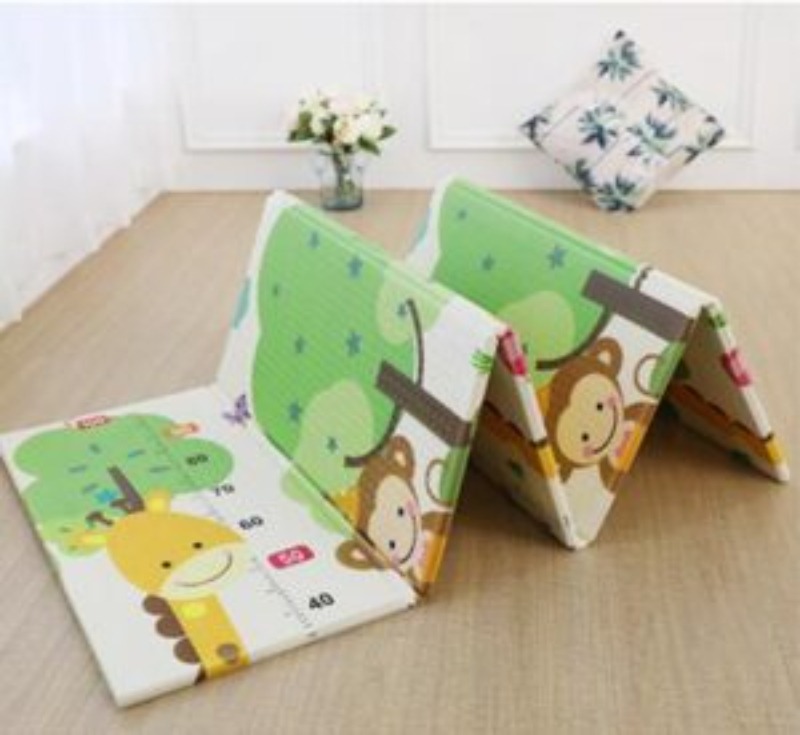
The freight allowance deserves a place beside the factory price when you compare mat formats. A folded stack and a long roll can produce quite different cartons, even with similar open dimensions. For an importer, the question is what each saleable mat costs when it reaches local stock. You need the actual packing plan to answer that.
What the Unit Quote Leaves Out
Landed cost adds the expenses between the quoted product and your chosen receiving point. Work through the journey on paper: origin pickup where applicable, main carriage, insurance, clearance, duty, and final delivery. Cross out anything already included in the seller’s price. Ask your finance team how to treat recoverable tax; it shouldn’t silently become a permanent product expense.
Product differences can overwhelm a packaging comparison. Put a small thin folded mat beside a larger thick rolled mat and you are pricing two offers, not isolating the effect of folding. Give both columns the same open size, material, thickness, print, accessories, and order quantity, or label each remaining difference.
A thickness choice needs its own cost line. For the PE-and-XPE 150 × 180 cm folding mat at WEITIAN PACKING, the listed options are 0.8, 1.0, and 2.0 cm. Pick one before requesting the carton data. The XPE foldable play mat configurations help identify the style, but the packing offer must refer to the version you intend to buy.
How Pack Shape Reaches the Freight Bill
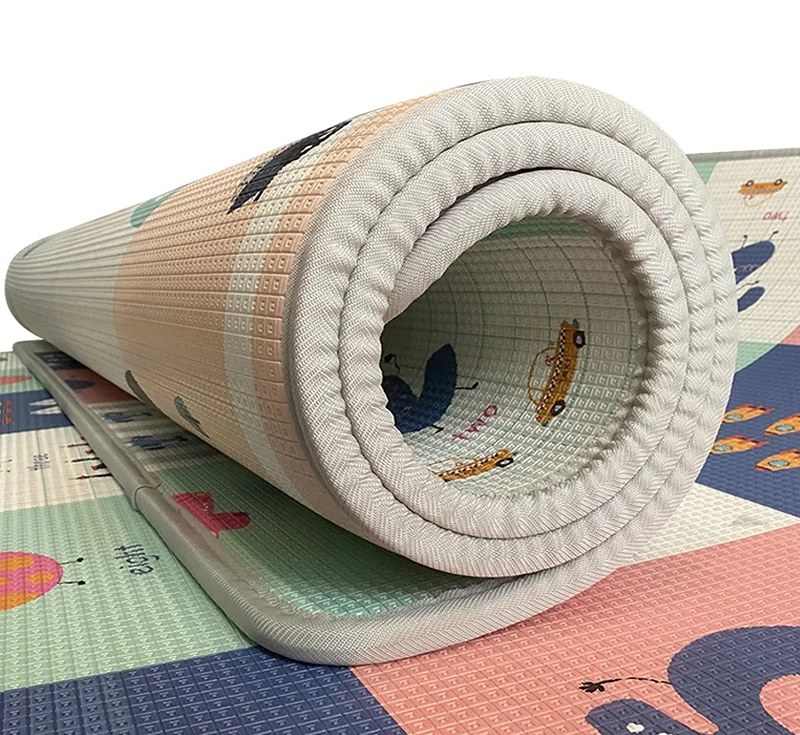
Pack shape matters after the foam has been wrapped and boxed. A roll leaves a curved outline; a folded mat leaves a stack with a broad face. Now add a bag, protective layers, and the master carton. The apparent space saving in an individual sample may look quite different at that stage.
Carton Cube per Mat
Carton cube is a useful screening calculation: outside length × width × height in meters, divided by the mats inside. Take the measurements from a filled, sealed carton. An empty box can bow differently, and a loose sample doesn’t tell you how much protection the shipping pack contains.
Consider a calculation with hypothetical dimensions: 0.60 × 0.40 × 0.50 m gives 0.12 m³. Ten mats in that carton would use 0.012 m³ each. Replace every input with the proposed order’s data. The example is just arithmetic; it carries no promise about WEITIAN PACKING carton quantities or shipment capacity.
Charged Space and Usable Space
The carrier’s billing basis is the next question. Ask whether this service uses actual weight, dimensional weight, a volume charge, or a container price, and whether a minimum applies. Keep the answer with the quote. A divisor borrowed from another air or parcel service can give a convincing-looking figure that the chosen carrier will never bill.
Container loading also depends on carton geometry. Two packs with similar cube can produce different load counts because their dimensions fit the container or pallet differently. A loading plan is more useful than assuming every cubic meter will be filled.
|
Cost Input |
Foldable Option |
Roll-Up Option |
|---|---|---|
|
Finished specification |
Exact approved SKU |
Matched specification or disclosed difference |
|
Individual package |
Folded dimensions and protection |
Roll length, diameter, and protection |
|
Master carton |
Outer size, gross weight, units |
Outer size, gross weight, units |
|
Load count |
Confirmed carton arrangement |
Confirmed carton arrangement |
|
Freight basis |
Same route, date, and service |
Same route, date, and service |
A Comparison That Uses the Same Commercial Boundary
Quotation boundaries can make two prices look closer than they are. An EXW figure leaves transport tasks with the buyer that a delivered figure may include. Write down the named place and included services beside the Incoterm. Then add the missing charges until both offers reach the same receiving warehouse.
A wholesale roll up play mat order needs its own packing figures. The wholesale roll-up play mat format is a relevant product starting point, but a roll diameter cannot be inferred reliably from the open mat’s thickness. Confirm the finished roll and outer carton for the chosen order.
The cost model should separate variable and shipment-level charges. Product and retail packaging costs usually attach to units; brokerage, minimum freight, and some handling charges may attach to the shipment. Allocate the latter over the actual saleable quantity. For mixed orders, agree a fair allocation basis instead of dividing every charge equally across unlike products.
Import charges need the importer’s attention. Give the broker the product description, origin, value, and destination, and ask for the applicable classification and valuation treatment. Copying a convenient duty percentage from an online search leaves too much unresolved to support the final margin calculation.

The Destination Can Change the Winner
Destination handling can upset a narrow freight advantage. Imagine a pack that saves overseas space but doesn’t fit your parcel service’s preferred size tier, or cartons that need rearranging for the warehouse rack. Price the constraints of your own channel. A store shelf and a parcel network ask different things of the same mat.
Arrival condition belongs in the comparison because only saleable stock earns the planned margin. Open samples after a representative packing and handling sequence and inspect their shape, surface, and presentation. Where you have reliable trial results or claims history, use them. Without that evidence, leave a damage allowance unresolved rather than favoring one format on instinct.
Order size deserves a second calculation. Quote the trial quantity and the likely replenishment quantity separately. Minimum freight or clearance charges may dominate the first; a fuller load may make carton fit much more influential later. The format you choose for a launch need not remain the economical choice at every volume.
A Short Worksheet for the Final Decision
An incomplete worksheet is still useful if its gaps are visible. For wholesale baby playmats for distribution, keep the following checks beside the total so the purchasing team can see what has been confirmed and what is still an estimate:
Match specifications and disclose any remaining product differences.
Record the delivery term, named place, currency, and quote date.
Confirm sealed carton dimensions, weight, quantity, and loading arrangement.
Obtain freight for the same route and shipment size.
Add verified import and destination charges without duplication.
Divide by saleable units and test the result at the expected order volumes.
An uncertain freight or loading figure is worth testing before approval. Substitute a second realistic quote or a confirmed carton count and recalculate. If that small change switches the preferred format, the decision needs better data. There is little value in negotiating cents on the product while leaving the larger assumption unchecked.
The Better Format Has the Better Complete Cost
The stronger format is the one that fits both the shipment and the local channel at a cost you can explain. Compare matched products to one destination, using confirmed packing and current freight. Keep the underlying figures with the cost per saleable mat; that makes the next order easier to reassess.
For a format comparison with WEITIAN PACKING, discuss your shipment assumptions and the exact mat specification so the packing proposal addresses the same quantity and destination.
Veelgestelde vragen
Are Foldable Play Mats Always Cheaper to Ship?
No. Folding may create a convenient stack, but carton size, unit count, load arrangement, and the carrier’s charging basis decide the shipment cost.
What Does Landed Cost per Mat Include?
Include the product and all applicable costs to the chosen destination, without repeating charges already included in the quotation. Separate recoverable taxes where relevant.
Can I Estimate Freight From the Open Mat Size?
Only very roughly. Freight planning needs the finished package and master-carton dimensions, weights, quantities, and loading arrangement.
Should I Compare Carton Cost or Unit Cost?
Use cost per saleable mat for the commercial decision. Retain carton and shipment totals so the calculation remains traceable.
Why Can a Reorder Have a Different Cost Advantage?
Order volume, freight rates, minimum charges, and loading efficiency can change. Recheck the model for the actual replenishment quantity and current route quote.

Onze producten
Onze producten
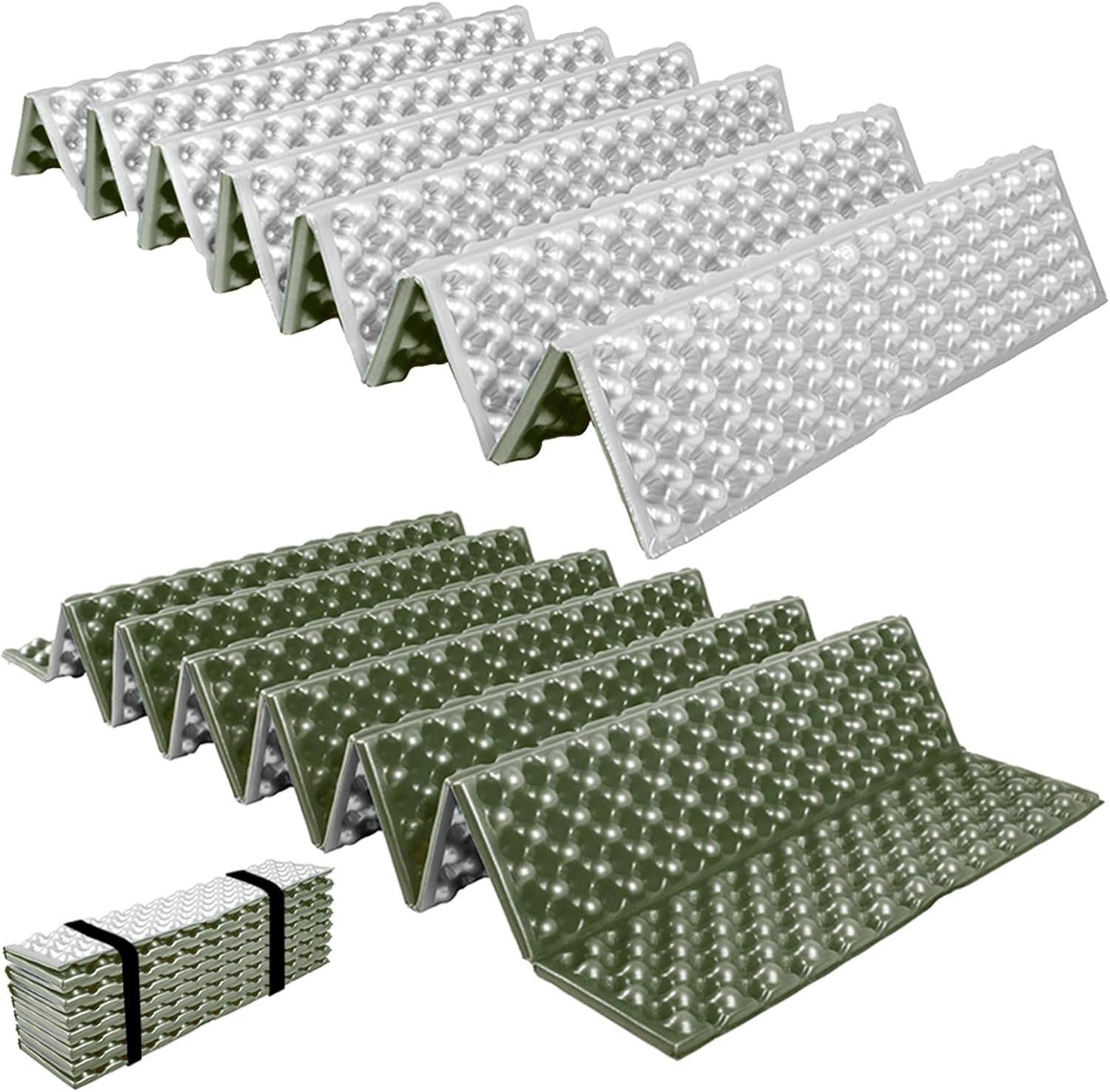
Opgevouwen formaat: 56 x 13 x 14 cm; uitgeklapt formaat: 183 x 56 x 18 cm; gewicht: 0,4 kg.
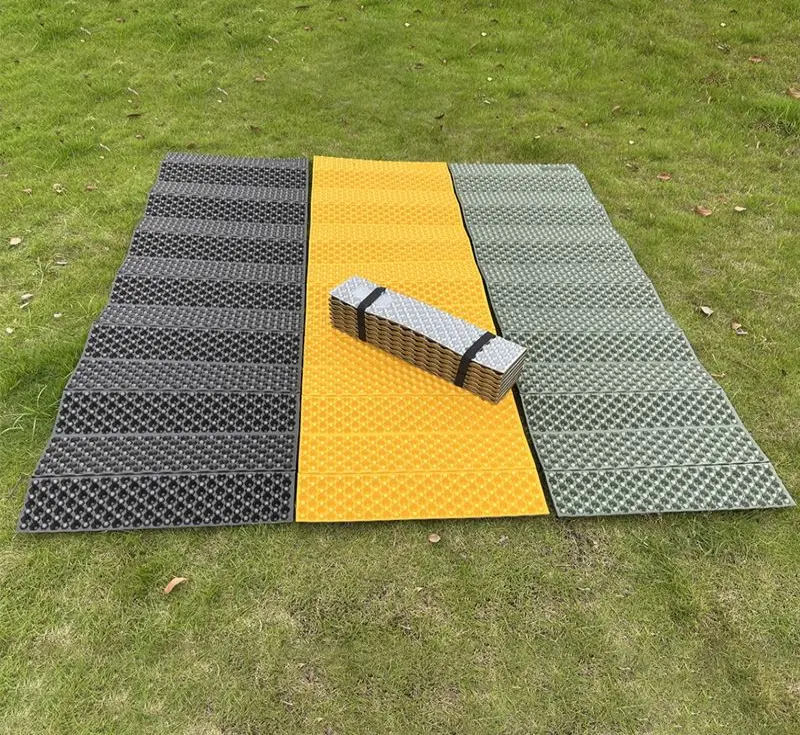
【Uitstekend materiaal】Dit draagbare slaapmatje is gemaakt van lichtgewicht IXPE-schuim waarop u comfortabel kunt liggen. Het slaapmatje van gesloten celschuim biedt ergonomische ondersteuning aan al uw drukpunten, waardoor u de hele nacht optimale ondersteuning en comfort ervaart, ongeacht uw slaaphouding.
【Gebruiksmogelijkheden】Deze vochtwerende mat beschermt je lichaam tegen vocht tijdens lange kampeertochten in de buitenlucht. Je kunt hem gebruiken als zitkussen of hangmat in een tent, en hij beschermt ook opblaasbare matrassen.


onze getuigenissen
Wat ze zeggen over ons

“Super patiënt tijdens de communicatie – efficiënt en professioneel. Deze samenwerking was zo moeiteloos!”

“Zowel kwaliteit als service overtroffen de verwachtingen. De details zijn op punt - ik zal het zeker aan vrienden aanbevelen!”

“Op tijd geleverd, en het product overeenkomde met elk detail dat we besproken hebben. Volledig tevreden!”