
Ressources
Nous contacterRoll Up Play Mats for Storage and Retail Display
-
 auteur
- 28 octobre 2026
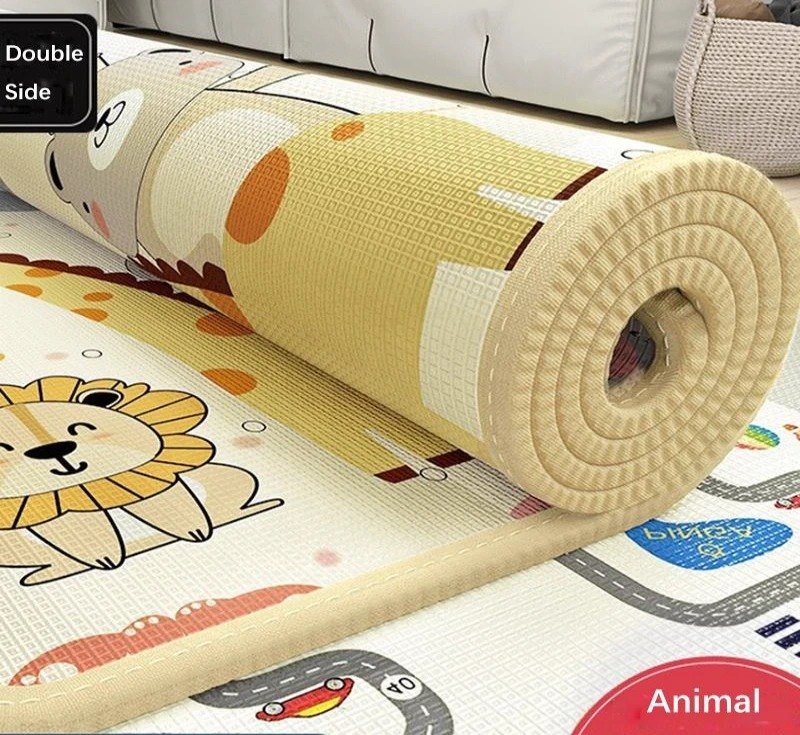
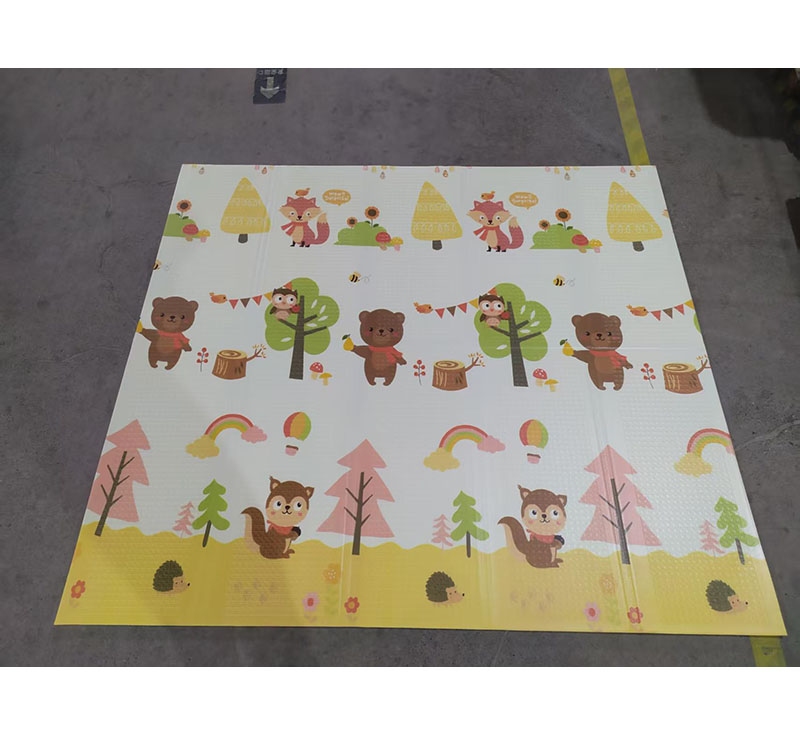
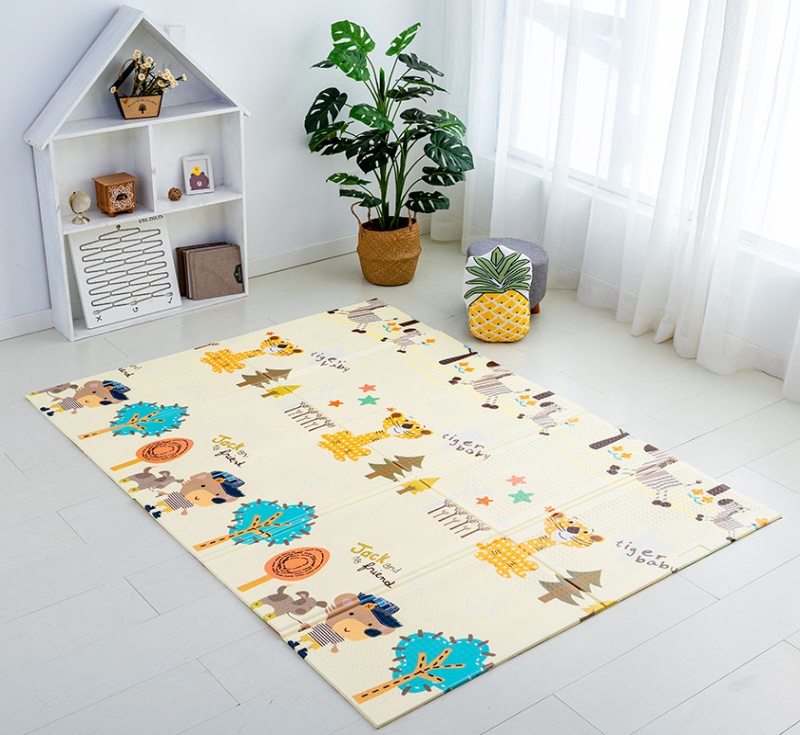
The photograph shows a generous play area. The stockroom receives a long roll. Both views matter when a distributor adds a roll up play mat to an assortment. Understanding the space it occupies before, during and after use helps retailers explain the format accurately, plan a useful display and avoid promising storage convenience that the finished package cannot deliver.
The long dimension remains after rolling
A rolled mat changes shape without becoming a small square. One dimension becomes the length of the roll; the other wraps around it. That simple distinction is easy to miss when comparing photographs of folded and rolled products.
For a retailer, the useful starting point is the finished package. Measure its length and widest diameter, including any bag or end protection. A mat can look slim in a lifestyle photograph while still needing a long shelf or a dedicated floor position.
Products designed around a continuous surface offer a useful example. WEITIAN PACKING’s roll mat family uses XPE foam with PE printing film and includes reversible designs. Its XPE roll up play mat gives retailers a format to explain through both an open sample and a packed unit.
The storage comparison should stay specific. A roll does not automatically occupy less space than a folding mat. Its usefulness depends on the available cupboard, shelf or transport space. Show the actual shape and let the customer judge whether it fits the place they intend to use.
Roll length and roll diameter
Roll length tells the retailer where the product can stand or lie. Diameter tells them how much depth that position needs. Record both measurements on the assortment sheet instead of using “compact” as the only description.
The diameter needs to come from a real packed sample. Foam thickness, the way the mat is rolled and the included packaging all affect the finished result. Do not calculate a shipping package from the open mat dimensions and assume it will match production.
The opening needs clearance too
The storage location should allow the roll to come out easily. A recess may have enough internal space but an opening too narrow for convenient handling. In a showroom demonstration, remove the mat from its package and put it back again; both movements belong in the presentation.
A display that explains the product honestly
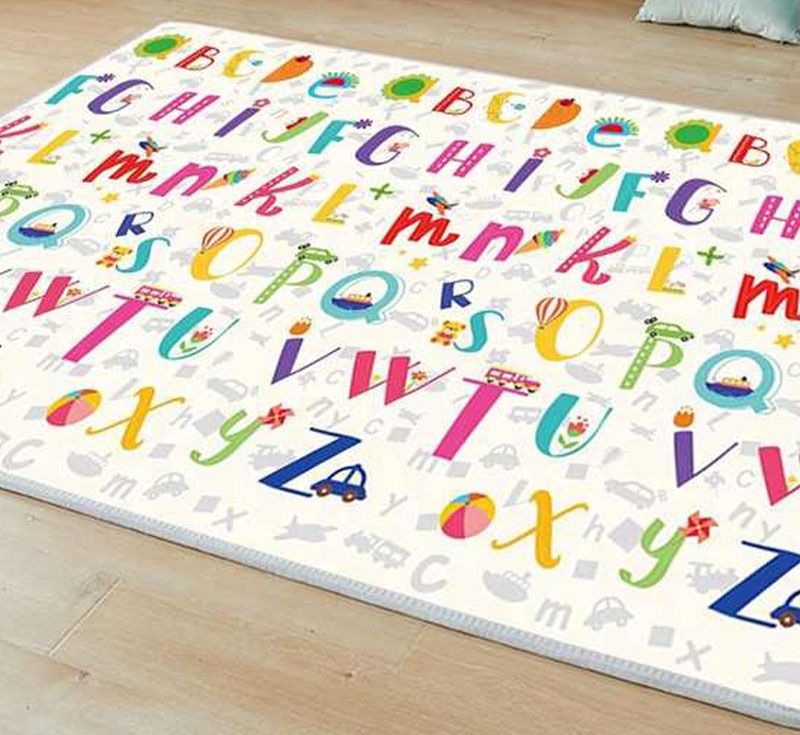
An open sample answers questions that a wrapped roll cannot. It lets buyers see the pattern at full size, feel the surface and understand how much floor it covers. Place the packaged unit nearby so the relationship between the two is clear.
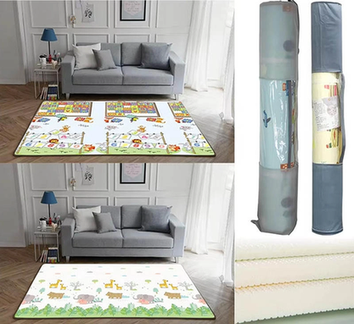
The reverse side deserves visibility if it is part of the selling proposition. With a double-sided XPE play mat, a photograph or small lifted corner may be enough to introduce the second pattern. Keep the displayed color pairing consistent with the unit being sold.
Handling claims should be easy to demonstrate. Ask a staff member to open and repack the exact sample using the supplied accessories. If that takes more space or a different movement than expected, change the demonstration and the description before putting the item on sale.
A useful display needs only a few concrete details:
The open length and width.
The packed length and diameter.
Clear views of both available sides.
The accessories included with that item.
Storage accessories need their own confirmation. A strap or bag visible on another model should not appear in the description unless it is included with the ordered version. Show the actual closure and explain how it is used without suggesting an unverified locking or carrying feature.
What happens between use and storage
Packing away starts with the condition of the surface. Follow the care instructions for the selected mat and allow it to dry before storage. A showroom team should be able to explain that routine without turning the demonstration into a full cleaning lesson.
Long-term pressure is worth avoiding. Heavy objects left on a foam play mat can deform it, so a storage display should not invite customers to stack boxes on the exposed roll. Support the product in a way that preserves its shape and keeps it easy to retrieve.
Rolling instructions must match the product. If the model is intended to roll, demonstrate that movement instead of sharply folding it to fit a smaller space. Where the instructions specify a direction or closure method, reproduce that method in retailer training and customer images.
|
Retail situation |
Useful presentation |
Detail to verify |
|---|---|---|
|
Long stockroom shelf |
Packed unit lying within the shelf |
Total length and stable support |
|
Small display area |
Open sample plus package photograph |
Accurate scale and dimensions |
|
Online product listing |
Open and rolled views together |
Same model and design in both |
|
Staff demonstration |
Opening and repacking the sample |
Actual accessories and method |
|
Customer storage question |
Measured package information |
Clearance at the storage opening |
The table is a planning aid, not a storage specification for every mat. Match it to the product in hand. A change of thickness or pack design is a reason to measure again, even if the open mat size has not changed.
Buying a roll format without guessing the package
A wholesale roll up play mat order needs a shared understanding of what arrives. Request the unit package dimensions as well as the carton dimensions, because they answer different questions. One concerns shop display; the other concerns handling and freight planning.
The product range offers room for different dimensions. WEITIAN PACKING accepts customized sizes for its roll mat family, alongside several standard options. Discuss the required footprint with the supplier, then review how that exact mat will be packed. A customized open size does not establish its packed measurements.
The broader baby play mat range can help a distributor place the roll format within an assortment. Give it a distinct role, such as a continuous play surface with roll-away storage. Keep comparisons tied to real samples instead of calling one format universally easier.
Repeat orders should preserve the agreed presentation. Retain photographs of the packed sample alongside its measurements and accessory list. If the packaging changes, review whether the product still fits the shelf, images and demonstration already prepared for retailers.
A clearer storage promise
A roll up play mat is easiest to explain when retailers show its whole cycle: open, use, pack and store. Measure the roll, demonstrate the included accessories and keep the display consistent with the ordered model. The result is a storage promise customers can check for themselves.
If your assortment needs a particular open size or package arrangement, Contactez-nous to discuss the relevant WEITIAN PACKING roll mat options and request measurements for the selected version.
FAQ (questions fréquentes)
Does a rolled play mat always save more space?
No. It creates a long cylindrical package, while other formats pack differently. Compare the actual packed dimensions with the intended storage location before describing one as more convenient.
Which measurements should a retailer display?
Show the open length and width together with the packed length and diameter. Identify whether those measurements include the bag or other packaging so the customer can make a useful comparison.
Can a roll mat be folded to fit a cupboard?
Follow the instructions for that specific model. Do not demonstrate sharp folding on a product intended to roll simply because it fits the available cupboard more easily that way.
Should the display show both sides?
Yes, when the selected product is reversible. Use images or a sample that shows the actual pairing. Avoid displaying a reverse pattern that belongs to a different version.
Are carrying bags and straps always included?
Their inclusion must be confirmed for the ordered item. Keep the accessory list with the approved sample and show the exact closure or bag in retailer photographs and demonstrations.

Nos produits
Nos produits
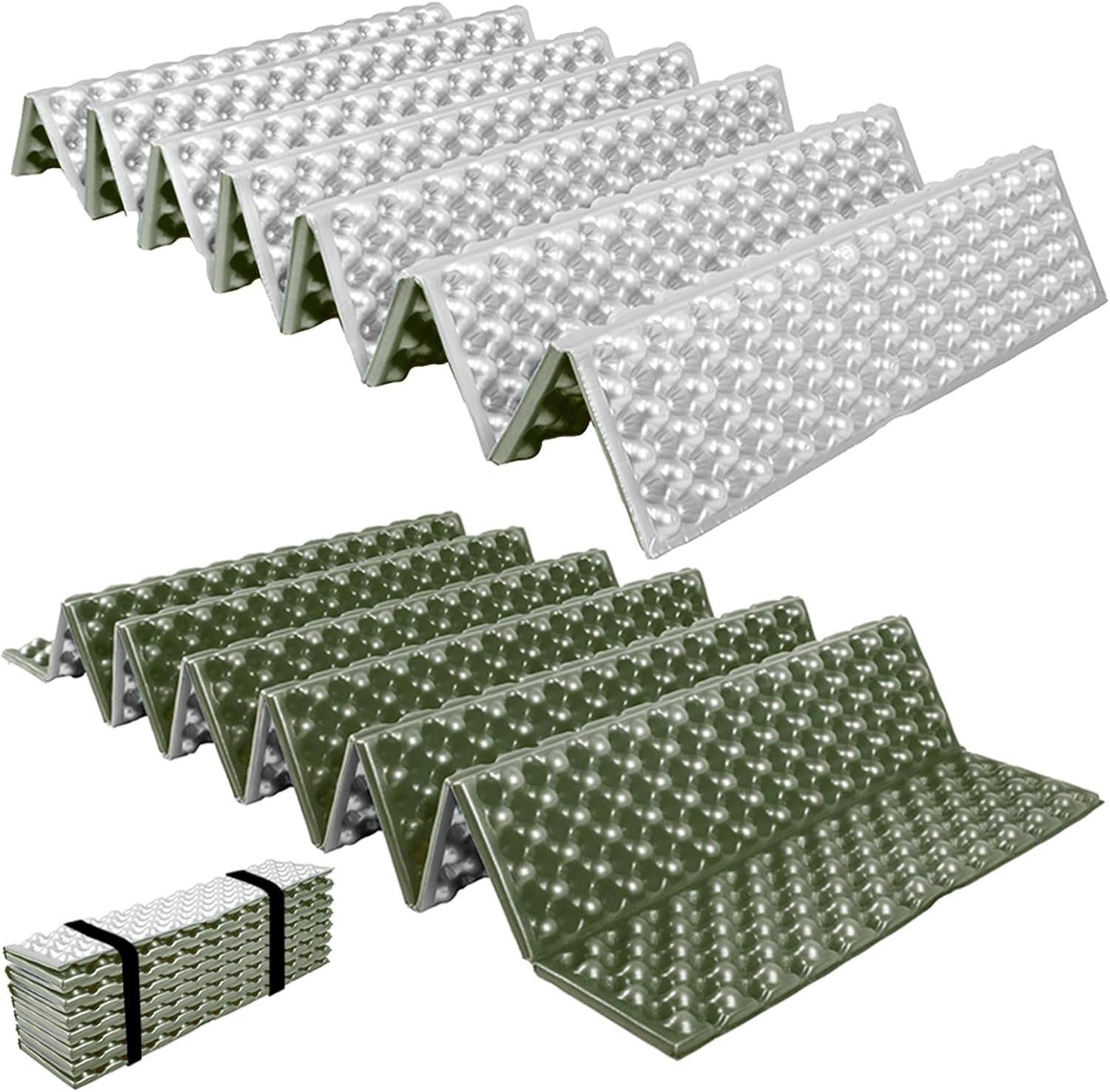
Dimensions pliées : 22"*5"*5,5" ; dimensions ouvertes : 72"*22"*0,71" ; poids : 0,4 kg.
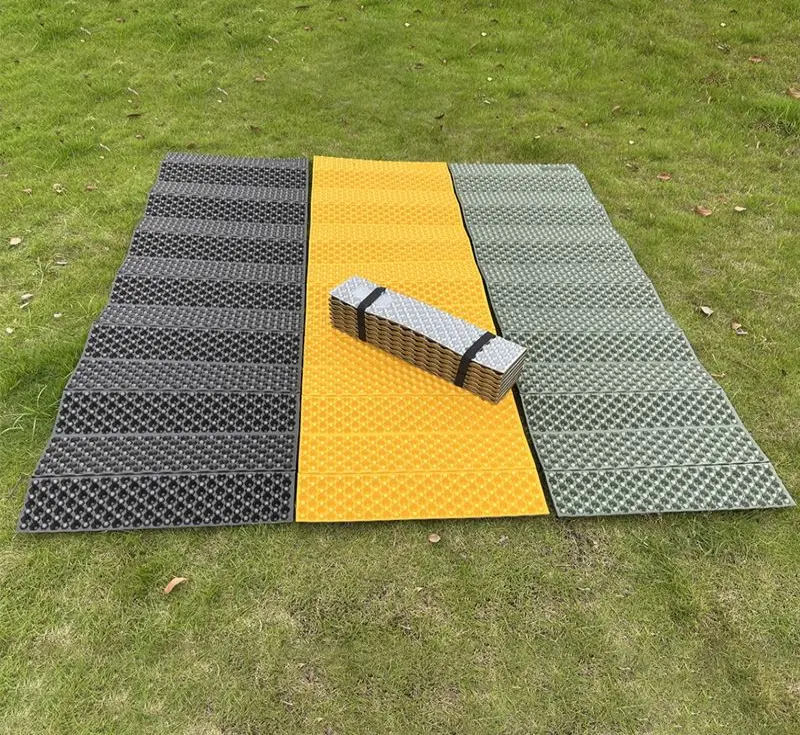
【Matériau de qualité】Ce matelas de sol portable est fabriqué en mousse IXPE légère et confortable. Sa mousse à cellules fermées offre un soutien ergonomique à tous vos points de pression, vous procurant un confort optimal toute la nuit, quelle que soit votre position de sommeil.
【Utilisation】Ce tapis imperméable peut protéger votre corps de l'humidité lors de longs séjours en camping. Vous pouvez l'utiliser comme siège ou pour une tente hamac, et il peut également protéger un matelas gonflable.


nos témoignages
Ce qu'ils disent de notre

“Super patient tout au long de la communication – efficace et professionnel. Cette collaboration a été si sans tracas!”

“La qualité et le service ont dépassé les attentes. Les détails sont exacts. Je le recommanderai certainement à mes amis!”

“Livré à temps, et le produit correspond à tous les détails que nous avons discutés. Totalement satisfait!”